
The Global Scope of Public Health Education: A Complete Guide for Nepali Students
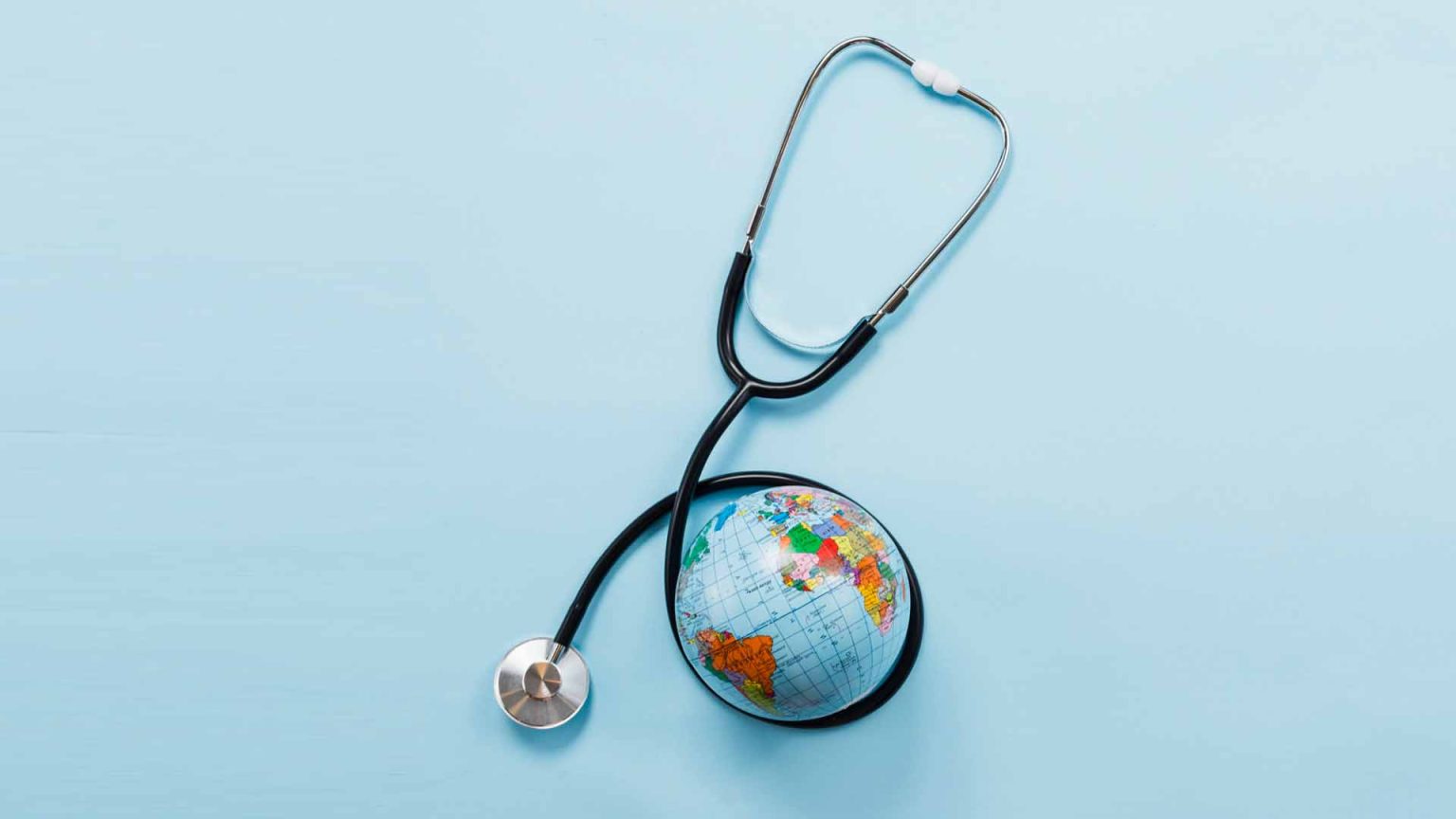
In today’s rapidly changing world, Public Health has become an extremely relevant and vital academic and professional field. As the population continues to grow across the globe, the types of health concerns we face (such as pandemics, climate change, mental health issues, chronic illness) will continue to become more prevalent and complex. As a result of this, the need to educate individuals in Public Health has increased dramatically around the world. For students from Nepal, studying Public Health abroad provides them with not only an international experience and an education that is well-respected around the world, but also access to advanced health care systems, research opportunities, and global career paths. The United States of America, the United Kingdom, Australia, Germany, the Netherlands, New Zealand, Canada, and other such countries are now popular destinations for Nepali students who wish to pursue a meaningful career in Public Health.
Education in the field of Public Health will teach students how to improve the health of entire populations rather than simply treating one person at a time. Public Health programs will emphasize many different aspects of providing healthy populations such as preventing disease, promoting healthy behaviour, understanding how diseases spread (through Epidemiology) and how to collect and analyse health-related data (through Biostatistics). In addition, students will have an understanding of Health Policy, Environmental Health, Global Health and the Management of Health Systems. Public Health graduates will work for government agencies, international organizations, non-governmental organizations, hospitals, research institutions and private consulting firms in the healthcare industry. With the continued growth of global health challenges and concerns, the need for and demand for Public Health graduates has never been higher, and the ability for these graduates to obtain meaningful employment has also never been better.
Public health education has a remarkable reputation in the United States, making it one of the most popular destinations for international students pursuing public health degrees. The US is home to many of the most respected institutions in the world, including Johns Hopkins University, Harvard University, Columbia University, and the University of Michigan. US public health programs are characterized by their research-intensive curriculum, cutting-edge facilities, and numerous areas of study. A typical Master of Public Health degree program lasts between one and two years, and provides graduates with comprehensive training in epidemiology, biostatistics, health policy, global health, and environmental health. The cost of tuition and living expenses can be relatively high at US universities, but US universities provide a variety of scholarships, assistantships, and paid research opportunities to help reduce costs for students. In addition, Nepali students who graduate from US universities can gain experience working in public health after graduation through Optional Practical Training (OPT). The US has excellent long-term employment options for public health professionals in public health agencies, hospitals, nonprofits, and global research organizations.
Public Health students looking for an education that will give them access to a world-class education within a relatively short period of time can find the United Kingdom (UK) to be one of the top countries in which to study. Most Master’s degrees in Public Heath take only one year to complete making them cost and time effective choices. Some of the world’s leading institutions of public health such as the London School of Hygiene and Tropical Medicine, University College London, King’s College London and the University of Manchester are among the many world-class institutions offering significant contributions to the fields of public health and related areas in the development of public health research and public health policy. In addition, UK universities that offer a public health education have strong relationships with the National Healthcare System in the UK providing students with valuable real-world experience in public health within the UK. Additionally, Nepali students can qualify for several types of scholarship such as Chevening and Commonwealth scholarships. Upon graduating with a Master’s degree in Public Health from a UK university, international students can apply for a Graduate Route Visa, allowing them to return to the UK for up to 2 years for the purpose of working and pursuing employment opportunities in the UK healthcare systems – thereby making professional public health graduates from UK universities highly sought after by employers worldwide.
International students from Nepal have an increasing amount of interest when studying in Australia, due to the following characteristics: Australia has high academic standards, a multicultural society, and well-developed healthcare systems. In addition, Australian universities (including University of Melbourne, Monash University, University of Queensland and UNSW Sydney) offer comprehensive Public Health programs. These Public Health programs include courses on preventive medicine, health promotion, epidemiology and Indigenous Health; most of these courses are expected to take anywhere between 1.5 – 2 years to complete, and may offer students the opportunity to learn through internships and/or applied research. Also, Australia’s post-study work visa includes generous provisions for obtaining professional experience after finishing school, due to the current demand for Public Health professionals within different levels of government, research centres, non-profit research centres and hospitals. Thus, as an international graduate from a public health field, if you enter the job market in Australia, you will have a stable and successful career.
For many students who want to study public health in Germany at little or no cost, the number of quality institutions and job opportunities is growing rapidly. There are several state funded public universities in Germany which offer public health education and related programs with no or low tuition fees, even to international students. Some of the most well-known universities in Germany that have strong research and teaching in public health are Heidelberg University, Charité University Medicine Berlin and Technical University of Munich, and these universities have well established healthcare systems. While many programs are completely taught in English, taking the time to learn German will certainly greatly improve your employment prospects and daily life integration. In addition, Germany’s social security system and healthcare system provide you with a vast range of learning opportunities as a public health student. Once you graduate from your program, you will typically find positions in health research institutions, health insurance companies and international health organisations.
One of the most recognised aspects of the Netherlands is its progressive educational policies and commitment to research and innovation in public health. Some of the universities with available coursework are Erasmus University of Rotterdam, Maastricht University, and Leiden University; all three universities offer programs that are taught in English and have a focus on global health, epidemiology, and health systems research.
The Netherlands also creates an international atmosphere which allows students from Nepal to feel more comfortable adjusting to the culture and their studies. Graduates will have access to health networks and research within the EU, which will greatly expand their opportunities for employment throughout Europe and elsewhere.
New Zealand combines an excellent education, experiential and hands-on education, and a high quality of life. Examples of this include Public Health programs available at various institutions such as University of Auckland and University of Otago that focus on community health, preventive strategies, health promotion, Indigenous health systems, and more. New Zealand has a great learning environment for students due to its wide range of student welfare policies that are very supportive of students pursuing their education. Many Nepali students in New Zealand can work part-time while attending school, as well as apply for post-study work visas after graduating, which gives them the opportunity to gain valuable work experience internationally. Due to an increase in the demand for public health professionals, there are many opportunities for these types of individuals to work in different areas such as health policy, community health planning, and research.
With welcoming immigration policies, moderate tuition rates and good job market options, it is no surprise that Canada has become an increasingly popular destination for Nepali students. The University of Toronto, McGill University, the University of British Columbia, and the University of Alberta all offer Public Health programs that combine both theory and applied research through fieldwork. The importance of equity, population health, and evidence-based decision-making are all emphasized within Canadian Public Health education. After graduating from one of these universities, students may apply for the Post-Graduation Work Permit which will allow you to work in Canada up to three years. As there is a high demand for public health professionals in many provinces, Canada provides excellent long-term job and settlement opportunities.
While some of the most popular destinations for Public Health Education are already well-established, there are also several other countries in Europe – such as Norway, Sweden, Spain, and France – that have become increasingly attractive options for studying this subject. All of these countries provide access to high-quality education, well-developed public healthcare systems, and continuing to grow in the number of fully English-taught programmes being offered. The Nordic countries especially tend to focus on developing practices for the social welfare and preventive health, as well as perform public policy relevant research. Therefore, Nepali students who are interested in a low-cost education and would like to have strong exposure to research should consider these alternative countries.
When choosing an appropriate country to study Public Health, Nepali students should also take time to reflect upon tuition costs, living expenses, language skills, course syllabus, internship possibilities and post-study work opportunities, as these are all factors that influence their overall decision. Since Public Health is a very practical discipline, studying at colleges that provide practical experiences (internships, project participation, or community service) is beneficial when seeking employment. Finally, knowing about visa restrictions where they intend to live, combined with knowledge of local employment rights, will assist students planning for long term careers in their chosen fields.
By completing an education program in the field of Public Health, graduates have many job options available to them on a global basis. Graduates are able to procure jobs that include becoming: Epidemiologist, Public Health Analyst, Health Policy Advisor, Global Health Specialist, Program Manager, Health Educator, Researcher. Graduate students obtaining an education in the area of Public Health will learn skills that can be used in all countries and all areas of Specialization making this degree one of the most flexible and forward moving fields of study.
In summary, there is tremendous opportunity for students from Nepal to obtain Public Health education that is relevant in a global sense. Due to the emergence of the global health problem and the increased emphasis on preventive care, there is a higher demand than previously for Public Health professionals. The benefits of studying Internationally in Public Health includes: increasing the level of Knowledge in Public Health, gaining a Global Perspective, developing a Professional Network, and gaining greater Career Mobility. Nepali students who pursue a Public Health education in an appropriate location and program will position themselves to be leaders in Global Health and contribute positively to better health in communities throughout the world.
Graduates from Australian universities who complete their studies in accounting/finance are eligible for post-study work visas (PSWV) for a maximum period of five years. Graduates can use their PSWV to gain experience in the workforce and develop a solid foundation for a successful career in audit firms, banks, financial institutions, or corporate environments. Grad. No. grads. of Nepali Origin continue to have sustainable careers as members of the accounting profession through various points-based pathways to become permanent residents in Australia.